
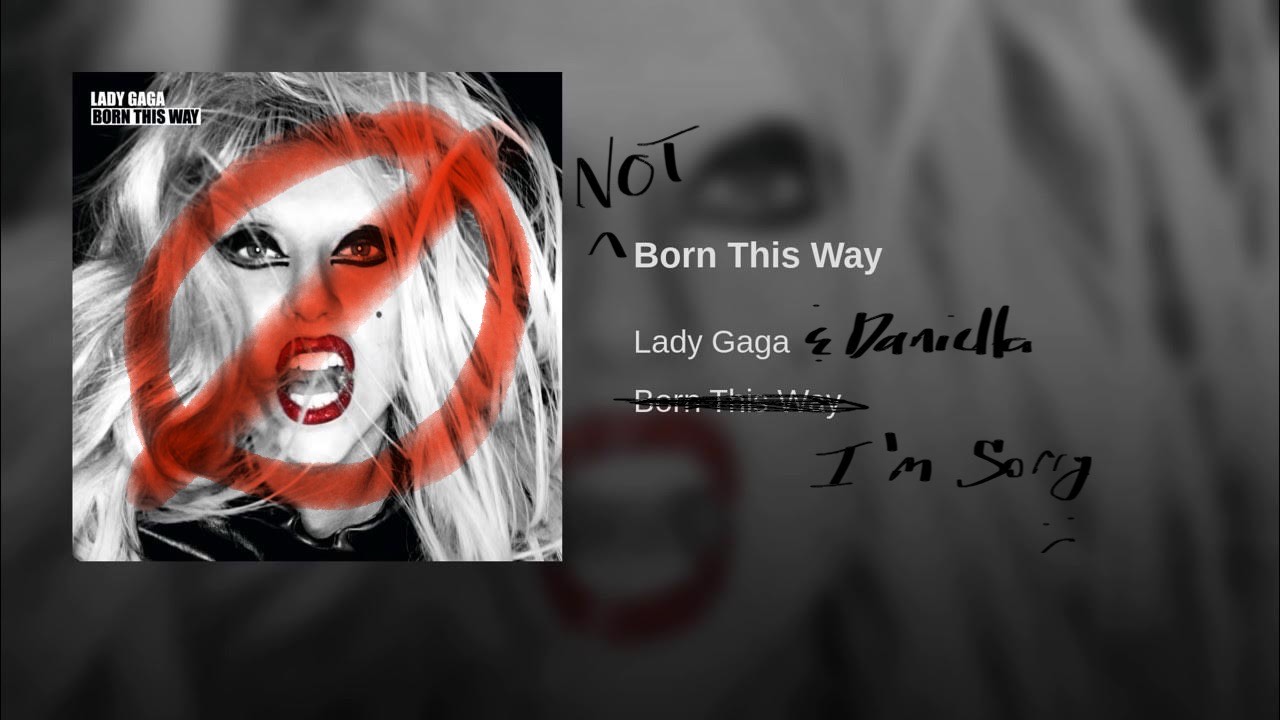
Receiving compliments will always be a surreal experience. A few days ago, I met up with my friend Daniella to chat and tackle our never-ending “to-do” lists. At some point, we swapped writing. She showed me a poem and an essay, and I presented her with an essay and, of course, a super awesome, fantastic, masterful blog post on modern pedagogy (shameless plug).
After reading everything, she exclaimed, “I swear, your mind – you’re a born writer!”
How the hell do I react to that?
Don’t get me wrong; I am a confident woman. I am an audacious woman. I know my talents and will declare them without embarrassment. Of course, I love compliments. At the same time, I have a serious fear of coming across as arrogant and self-absorbed, because, well, I am not arrogant and self-absorbed. Even writing this anecdote is making me somewhat self-conscious.
It is a delicate conflict between ego and presentation that has led me to master accepting compliments like that with grace.
“Thank you, thank you; I love what I do,” I replied – but, internally, I looked like this:

What added to the surreal factor was the nature of the compliment itself. No, I am not a “born writer”. No one is a “born writer”. In fact, University of Maine’s composition studies professor, Dylan B. Dryer asserts that writing is not natural. I was not born with a quill in my tiny baby hands, drafting sonnets before I could crawl. If anything, writing is an elaborate human invention—a messy, clunky system of scribbles and symbols we all pretend makes perfect sense.
Despite its unnaturalness, writing rules the world. It mediates everything—laws, history, your embarrassing middle school diary. Writing scholar and professor David R. Russell points out how writing is a mediator of human activity, meaning it doesn’t just communicate ideas; it controls how people act. Don’t believe me? Try blowing through a stop sign and telling the cop, “But officer, writing is just arbitrary symbols! Who’s to say S-T-O-P actually means stop?” Let me know how that works out for you.
So, Daniella, I adore you. Lady Gaga, I bow to your cultural influence. However, I must humbly disagree: I was not born this way. Writing isn’t some divine gift bestowed upon me. It is something I clawed my way through—one poorly written essay, awkward transition and existential crisis at a time.
Writing: A Technology, Not Just a Skill
Many people like to think of writing as this pure, creative act—something that flows effortlessly from the depths of our souls, spilling onto the page in an explosion of brilliance. In my creative heart, I love thinking of writing like this, especially when I’m lucid at 3:41 in the morning off of a Slim Jim and Monster Energy. In reality, writing is a painstakingly acquired, technologically-driven process. If you have ever fought with autocorrect or screamed at a blinking cursor, you know exactly what I mean.
Collin Brooke and Jeffrey T. Grabill argue that writing is a technology, not just a basic skill. No, this does not refer to Microsoft Word or the Grammarly Chrome extension. This means that writing itself—the very act of putting words down in a fixed form—is a human-made tool that has evolved over time.
Think about it:
- In ancient times (as far back as 23,000 years ago), people carved symbols into stone tablets and editing a sentence meant chiseling it off and starting over (talk about high stakes).
- Then came parchment and ink, which made things easier, but if you spilled ink, congratulations, you just ruined hours of work.
- Fast forward to today, where you can type an entire rant, delete it in two seconds and pretend it never existed.
Each advancement in writing technology—from quills to typewriters to word processors—has changed the way we write and think. Ever notice how easy it is to restructure entire paragraphs in a Google Doc compared to rewriting a handwritten essay? That is because modern writing tools shape how we process and refine ideas.
On social media, writing transforms once again. Twitter (now X, I guess) made us all experts in concise, snappy arguments. Instagram captions are now (ideally) a delicate blend of storytelling and marketing, and hashtags function like metadata, organizing digital conversations in ways a printed book never could.
Still, because writing is a technology, it comes with built-in affordances and limitations. Typing on a laptop allows us to revise in seconds, but you can’t make a handwritten letter on a website.
If you have ever felt like writing is unnatural and tedious, that’s because it is. You are not failing; you are just navigating a complex, ever-changing tool that requires patience, adaptation and maybe a mild caffeine addiction.
Writing = Ethics (Or How to Trick People into Thinking You Know Things)
Writing is not just about what you say, but how you say it. Both can say a lot about you.
According to John Duffy, writing is an ethical act. Every time you put words onto a page or screen, you are making a series of moral decisions. Whether you realize it or not, your writing frames reality for your audience. Depending on how you present your ideas, you can either be an honest, thoughtful communicator or a manipulative chaos gremlin – or maybe somewhere in-between.
The way you frame a topic can either inform your audience or manipulate them. For instance, look at two news article headlines on a new medication:
Headline 1: New Medication Shows Promising Results in Early Trials
Headline 2: Scientists Discover Miracle Cure Big Pharma Doesn’t Want You to Know about!
Headline 1 is responsible and factual. Headline 2 is deceptive, emotionally charged and dripping in conspiracy-theory energy. Both statements refer to the same research, yet one respects the audience’s intelligence, while the other plays on their fears for engagement.
This brings us to the fine line between persuasion and deception. Every piece of writing—whether it’s an academic paper, an advertisement or a political speech—makes choices about what to emphasize, what to downplay and how to construct an argument. Let’s look at some more news headlines.
Headline 1: Research Suggests Plant-based Diets can Improve Heart Health.
Headline 2: Eating Meat is Basically Volunteering for an Early Death.
The first headline presents evidence without forcing a conclusion. The second headline sensationalizes the claim to provoke a reaction. Even in everyday writing, these ethical choices come into play. Have you ever crafted a text message that was technically true but left out key details to make yourself look better? Congratulations, you’ve engaged in a form of ethically questionable rhetoric (don’t worry; this stays between us).
At its core, ethical writing comes down to three things: clarity, accuracy and fairness. If your audience has to decode your meaning like a riddle, you have failed at clarity. If you twist facts to make your argument sound more compelling, you have failed at accuracy. If you are misrepresenting someone else’s views—turning a nuanced argument into an absurd strawman just to tear it down—you have failed at fairness. Writing is power, and words can mislead, inform, comfort or deceive. Whether you are crafting an article, an essay or a tweet, that power comes with responsibility.
Alas, You can Never Be an Expert Writer
Sorry. There is no such thing as a “writing expert”. Writing is not a single, monolithic skill that you master once and apply everywhere. Instead, there are experts in specific types of writing. Lawyers master legal writing, journalists excel in news writing, poets craft language with precision and emotion and academics navigate the labyrinth of scholarly discourse.
Michael Carter explores this idea by distinguishing between cognitive rhetoric (general knowledge) and social rhetoric (local knowledge). Cognitive rhetoric suggests that writing expertise comes from universal strategies, such as organizing ideas, structuring arguments and revising effectively. These skills are transferable, meaning they can help you write across different contexts. However, social rhetoric argues that true expertise is domain-specific. What makes someone an expert in scientific writing won’t necessarily make them an expert in screenwriting. Knowing how to write a killer lab report does not mean you can turn around and craft a Pulitzer-winning novel (and vice versa).
Okay, how do you actually get better at writing? Carter outlines a five-stage progression from novice to expert, which I will now dramatically reinterpret:
- Novice:“Wait… so, what’s a thesis statement again?”
- You’re still relying on rules and formulas (e.g., five-paragraph essays, rigid outlines).
- Your writing may feel robotic because you haven’t yet learned when to break the “rules.”
- You probably Google “how to start an essay” way more often than you’d like to admit.
- Advanced Beginner:“Okay, I think I know what I’m doing, but why does my writing still sound off?”
- You’ve internalized the basics but struggle with higher-level decisions (e.g., how much background info to include, how to transition ideas smoothly).
- Your writing is technically fine, but it still feels stiff—like a freshly ironed shirt that nobody has actually worn yet.
- Competent Writer:“I can write pretty well, but why does revising take forever?”
- You’re learning how to balance rules with flexibility.
- You start thinking more critically about your audience and purpose.
- Your biggest struggle? Revising and refining ideas without rewriting everything from scratch.
- Proficient Writer:“I no longer panic before writing an essay. Progress.”
- Writing feels more intuitive, and you can adapt to different genres and contexts.
- You still revise, but now it’s about polishing ideas rather than fixing basic issues.
- You’ve stopped relying on formulas and can make more sophisticated writing choices.
- Expert in Writing:“Writing is just thinking on paper.”
- You’ve developed deep, specialized knowledge in a particular area of writing.
- You make instinctive decisions about language, structure, and tone based on years of experience.
- You can effortlessly switch between formal and informal writing styles, adjusting to your audience like a linguistic chameleon.
Remember: expertise in writing is never absolute. Even the most experienced writers are constantly learning, adapting and revising. The difference is that they have put in many hours to the point that writing has become second nature in their specific domain. A novelist, for example, would not struggle with dialogue the way a beginner would, but if you ask them to write a Supreme Court legal brief, they would be just as lost as the rest of us.
. . .
You don’t wake up one day and suddenly become an “expert in writing.” Instead, you slowly build experience within a particular field, developing the skills and instincts needed to navigate that space. The best thing you can do? Write. A lot. In different contexts. For different audiences. Challenge yourself. Get feedback. Revise. Most importantly, accept that feeling lost at times is part of the process.
I can’t stand when people assert that they are not or will never be good at writing, because it is just not true. You are given a beautiful skill that continues the tradition of human exceptionality, and you just want to give up on it? No way. I never gave up on myself. Now look at me. I’m a writer that apparently leaves people in awe.
No, I’m not a “born writer”…but, you know, if you want to stroke my ego a bit…



Leave a Reply