
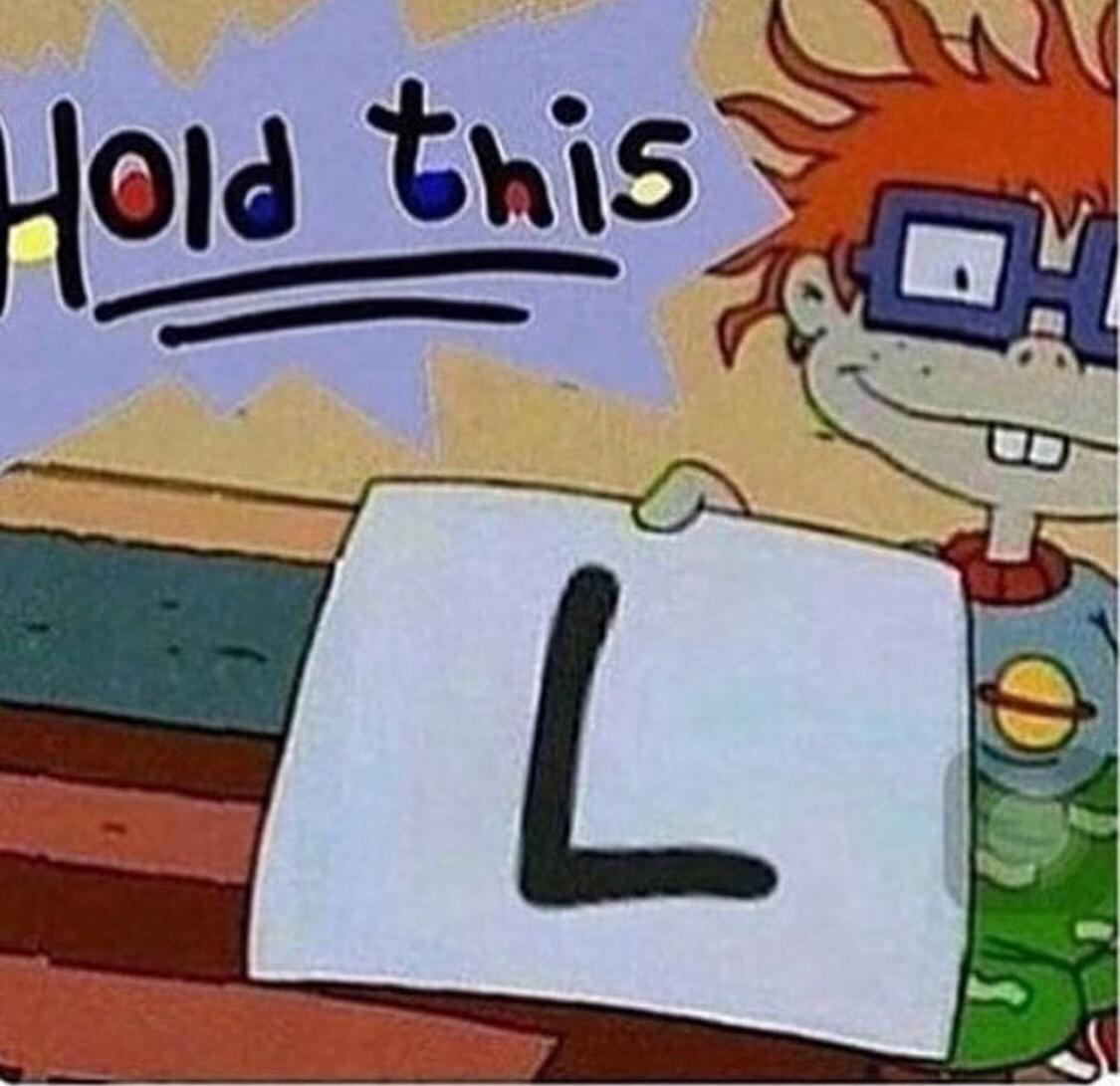
Breathe. It’s okay. I promise. There is not a single person on this planet who has not taken an L.
Sometimes, it’s a small, occasional L—the kind you brush off, like accidentally liking someone’s 2016 Instagram post. Other times, it’s a relentless series of Ls, piling up until the entire day feels like one colossal, record-breaking, undefeated L.
Overslept? L.
Forgot your earbuds at home? L.
Ordered food, came back home, only to realize that they gave you the wrong order? L.
Sent a slew of drunk texts to your ex who you swore you were going no-contact with, only to wake up to them shutting you down? You might as well tattoo the letter on your forehead.
Taking Ls is just a part of the process. Life is trial and error, and writing is no different. It truly humbles you. If you ever found any piece of writing pre-frontal lobe development, you know what I’m talking about.
If you think your first draft is supposed to be brilliant, I hate to break it to you—but it is probably a hot mess. And that is exactly how it should be.
As I mentioned before, great writing isn’t born; it’s built. The best writers do not nail it on the first try. They revise, rethink and rebuild until their words actually do what they want them to do.
Sure, your first draft is not the masterpiece you think it is. It takes some work. Revision is where the real magic happens. If you learn how to hold that L long enough, you will have a W soon.
First, Let’s Get Physical
Relax, you’re not going to have to go through a Rocky training montage just to write a decent paragraph. Most people think of writing as a purely intellectual activity—just you, your brain and a blank page mocking your existence. Educators Charles Bazerman and Howard Tinberg assert that writing is much more than a cognitive process; it’s a full-body experience.
This is way more than you scribbling away with your pen or typing on your keyboard. Have you ever noticed how writing feels? If you’ve ever:
- Hunched over your laptop, shoulders up to your ears like you’re bracing for impact,
- Stared at a blinking cursor so hard it burned into your retinas,
- Felt an actual rush of adrenaline when you finally found the perfect phrase,
- Slammed your laptop shut in frustration and walked away Real Housewives style
…then you have experienced the physical effects of writing.
Writing is not just about putting thoughts into words; it’s about engaging with your entire being. Ever written something that felt off, even if you couldn’t explain why? That is because writing is not only logical but intuitive and emotional, too.
Think about it. When you get excited about an idea, you type faster. When something isn’t working, you frown, groan and hit backspace aggressively. When you finally get a sentence just right, you physically relax—maybe even smile like you just solved world peace.
Your posture, breathing and even facial expressions change depending on what you’re writing. Your body is talking to you. Listen to it.
Passion Fuels Good Writing (Even for Research Papers, Sorry)
Bazerman and Tinberg also argue that even the most serious academic writing requires emotional investment. If you’re not at least mildly interested in what you’re writing, your audience won’t be either.
Sure, not every writing task will ignite your soul, but passion – or at least a strong opinion – makes your work sharper. Ever had to write a paper on a topic you hated? It was probably painful, slow and filled with uninspired, robotic sentences. Now, compare that to writing about something you actually care about—even if it’s just a rant about why your favorite childhood snacks were actually garbage.
Writing involves feeling as much as thinking. When you care about your subject, your words flow better, your structure makes more sense, and your writing doesn’t feel like a chore (well, not as much of a chore).
Your body is a part of the writing process. Next time you catch yourself clenching your jaw over a stubborn paragraph, take a deep breath. Loosen your shoulders. Maybe even stand up and yell at your screen for a moment (highly effective). Trust your gut. If something feels off, it probably is. Rewriting is not failure. It is your body’s way of telling you that your writing can be stronger. Don’t fight the feeling; fight those writing demons that are telling you that you’re a failure.
The L Draft
Now that you have physically, mentally and spiritually prepared yourself for writing, it is time for you to just put words on a page. Believe me, when you start writing, that is what it will look like…just a bunch of words…on a page.
Look, I get it. You poured your soul into that first draft. Still, your first draft is not a final product; it’s the starting point of a long, messy process.
Somewhere along the way, we were sold the lie that good writers just sit down and create brilliance in one go, as if their thoughts flow seamlessly from brain to page by the decree of some divine edict of literary genius. Through this mentality, the word draft has carried a negative, shameful connotation of imperfection and incompleteness – despite the fact that imperfection and incompleteness are the precursors to innovation.
Even the best writers in the world write absolute nonsense in their first drafts. They write shit, then they revise it into something good. If your first draft makes you want to throw your laptop out the window, congratulations! You are officially a real writer.
Pedagogy prince Dr. Doug Downs understands that writing is iterative, meaning it happens in multiple drafts, not just one. This is just the beginning of the long, messy and necessary process of revision.
Think of it like cooking. Your first draft is the raw ingredients—chopped up, unseasoned and in desperate need of time on the stove. Revision is where you actually turn it into a meal. You know, actually seasoning your chicken…
First drafts are meant to be messy because writing is a process of discovery. You are figuring out what you actually want to say while you write. Once you get the words out, you can go back, refine them and make them work.
Stop treating your first draft like a sacred artifact. It is more like IKEA furniture—you’re going to have to take it apart and rebuild it at least three times before it actually functions properly.
Wait…
Do you know what revision means? Serious question.
At some point in your academic career, someone probably told you that revision is important, but they forgot to mention that most people completely misunderstand what revision actually is.
Most students think revision means tweaking a few sentences, swapping out basic words for fancier ones and running a final spell check before calling it a day. That is not revision. That is editing. While editing is a lovely thing to do before turning in a paper, it is not the same as revising.
No joke, this is how I have had to explain this before:
- Editing is like putting makeup on a bad selfie. You’re not changing the actual content; you’re just trying to make it look presentable.
- Revision is realizing that the selfie angle is terrible, the lighting is off and you need to take a whole new picture.
Editing makes writing look better. Revision makes writing be better.
Good revision is not about fixing typos. It’s about fixing ideas. It’s about asking the hard questions:
- Does this argument actually make sense, or did I just throw in a bunch of filler words to sound smart?
- Is this section necessary, or am I just repeating myself in different ways?
- Does this paragraph belong here, or should I move it somewhere else—or delete it altogether?
Some students – hell, even grown PhD holders – don’t do this kind of revision because it is uncomfortable. It is much easier to rearrange some commas than it is to admit that your entire second paragraph serves no purpose and needs to go. That is a massive L. Writers that actually want to improve themselves embrace that discomfort because they know that revision is where the real work happens.
Experienced writers do not just tidy up their drafts. They tear them apart and rebuild them stronger. Researcher Nancy Sommers discovered this key difference when she observed experienced and inexperienced writers. Experienced writers move paragraphs, rewrite entire sections, change their thesis and delete things they once loved because they understand that writing isn’t about clinging to what you wrote; it’s about making it actually work.
If your idea of revision is replacing “good” with “excellent” and running Grammarly one last time, you are still editing. If you are cutting, restructuring, rethinking and rewriting, now you’re revising.
If that sounds exhausting, well…uhh…welcome to real writing. Grab a Red Bull or something.
Fearing Failure is Probably the Biggest L You Could Ever Take
Nobody enjoys failing. It’s uncomfortable, embarrassing and occasionally soul-crushing. When it comes to writing, failure isn’t just an unfortunate side effect but a necessary part of the process as well. Scholars Collin Brooke and Allison Carr said it best: failure is an opportunity for growth.
The problem is, most people associate failure with incompetence. If something does not turn out perfectly on the first try, they assume they are just bad at it. That is not how writing—or any creative skill—actually works. Even the most celebrated authors have written Wattpad smut under an alias that they will take to the grave. They do not see failure as an indictment of their talent—they see it as an inevitable step toward improvement.
Every good piece of writing has a graveyard of deleted paragraphs, abandoned ideas, and rewritten sections behind it. That is not failure. That is writing.
Unfortunately, most students (and let’s be honest, a lot of adults) don’t allow themselves to fail when they write. Instead of exploring ideas freely, they stress about getting it right the first time, afraid to write something “wrong” or messy. They focus so much on avoiding failure that they end up playing it safe—writing dull, formulaic sentences that follow the rules but lack originality or depth.
Great writing doesn’t come from playing it safe. Great writing emerges from taking risks, trying things out, and yes, failing repeatedly until something finally works. The sooner you stop resisting failure and start embracing it, the better your writing will become.
Look at this post. Look at all of my posts. I’m making pop culture references, crafting silly subheadings, cursing – all of this blended into insightful critique designed to help others find their writing mojo, no matter if they are students, educators or whatever. That takes guts, doing the chicken dance every ninety minutes and keyboard smashing like lqui3wefs riho;napdvS?CAlbjgWM.
Go ahead. Be awkward. Let some ideas flop. Experiment, make mistakes and lean into the discomfort of knowing that your writing won’t be great right away. That is not a sign of failure. It’s proof that you’re doing it right.
. . .
At the end of the day, writing is just learning how to take Ls more gracefully until they somehow turn into Ws. No matter how bad or scary it may seem, each failure possesses the opportunity to push you closer to something great—something that actually works. The writers who take the most Ls are the ones who actually get better.
Remember: L stands for loss, not loser, which means that your efforts are not hopeless. Loss is temporary.
Now go write, revise and hold your Ls proudly.


Leave a Reply